
Tool dossier

Openinary

Open-source alternative to Cloudinary offering self-hosted media transformation. Works with S3/R2/MinIO. Upload, transform, and deliver images/videos without vendor lock-in.

1 sources 281 stars Self-hosted AGPL-3.0

Product snapshot

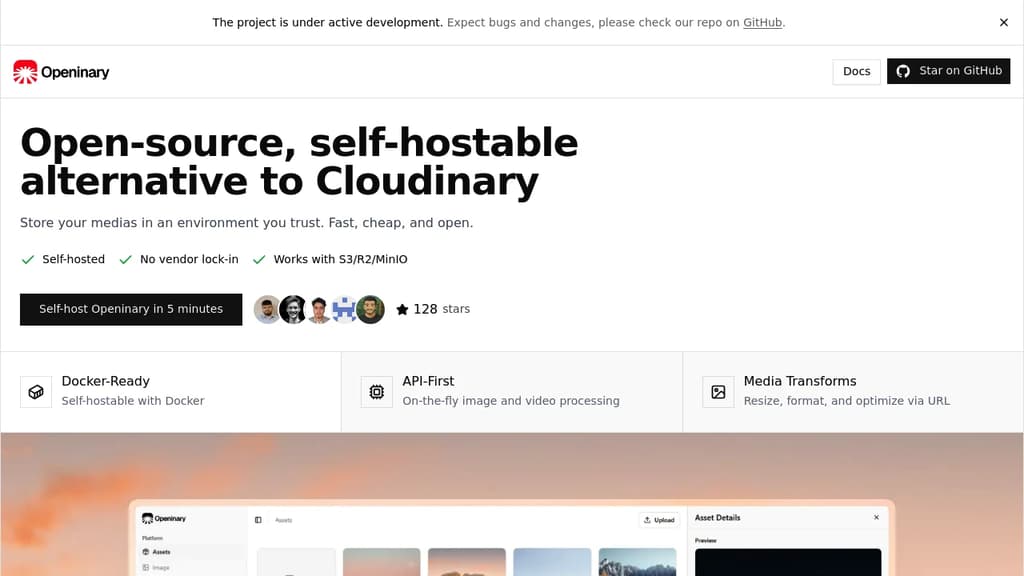
How the interface presents itself

Openinary interface screenshot

Positioning

What this project is really offering

The goal here is to separate raw catalog facts from the sharper product shape users care about before they commit time.

About

Take complete control of your media infrastructure with this open-source, self-hostable alternative to Cloudinary. Built for developers who want the power of professional media processing without the constraints of vendor lock-in. Key features that set it apart: The familiar URL transformation syntax makes migration straightforward if you're already using Cloudinary. Transform images with simple parameters like w_800,h_600,f_webp directly in the URL, or extract video thumbnails at specific timestamps. Perfect for developers who need: Get started in minutes with Docker deployment, then scale as your needs grow.

Highlights

The capabilities most worth remembering

01

Self-hosted freedom

02

S3-compatible storage

03

API-first design

04

URL-based transformations

05

Edge delivery

06

No usage limits

Evidence

What backs up the editorial summary

Primary source links