
About
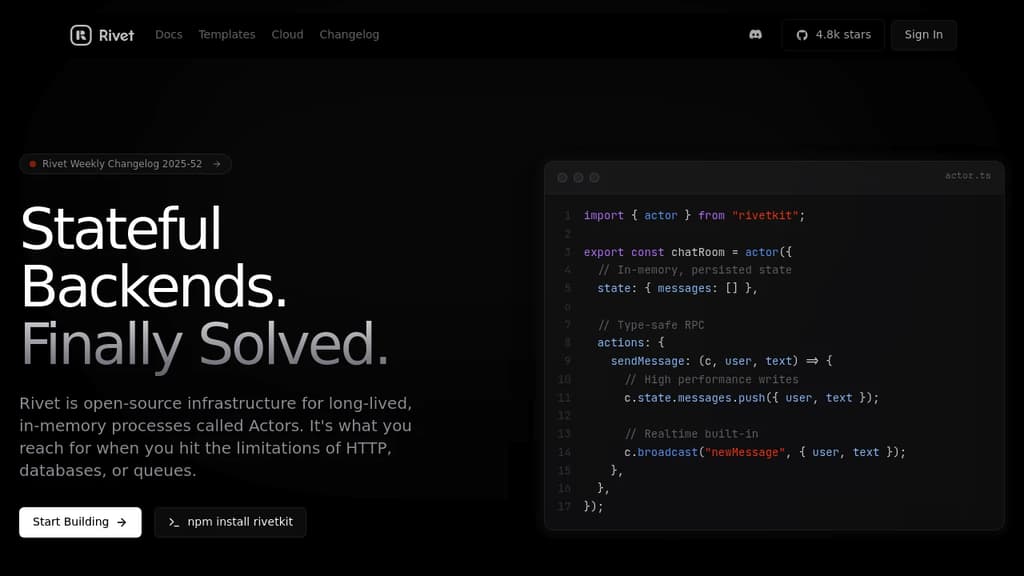
Rivet is an open-source serverless platform designed to make deploying and scaling AI agents, complex workloads, and backends effortless. It provides a frictionless experience for developers, allowing them to run applications anywhere—whether on the cloud, their own infrastructure, or a hybrid environment. Rivet combines powerful primitives like serverless functions, durable actors, and secure containers into a unified platform, giving you the flexibility to build anything from real-time apps to AI-powered services. Key features of Rivet include: Rivet stands out by removing the traditional constraints of serverless platforms, such as cold starts, proprietary runtimes, and limited protocol support. Its open-source nature ensures transparency and flexibility, while its robust feature set empowers developers to build, deploy, and scale modern applications with confidence. Whether you’re building AI agents, real-time systems, or complex backends, Rivet provides the tools and infrastructure to support your vision, all while maintaining control over your deployment and scaling strategies.