
Tool dossier

Windmill

Powerful, self-hosted platform for building and running workflows, scripts, and apps with code-first approach and collaborative features.

3 sources 16,239 stars Self-hosted

Product snapshot

How the interface presents itself

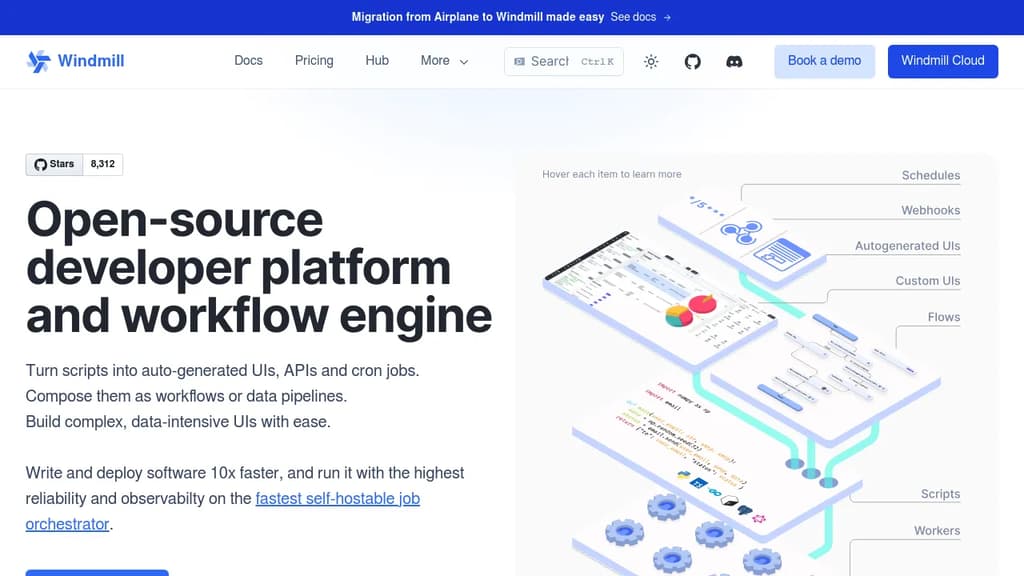
Windmill interface screenshot

Positioning

What this project is really offering

The goal here is to separate raw catalog facts from the sharper product shape users care about before they commit time.

About

Windmill is a fast, open-source workflow engine and developer platform designed to transform scripts into comprehensive workflows and user interfaces. It serves as an alternative to popular tools like Retool, Airplane, and Airflow, supporting multiple languages including TypeScript, Python, Go, PHP, Bash, SQL, and Docker images. Windmill offers both intuitive low-code builders and a robust webIDE, catering to a wide range of development needs. Windmill streamlines the development process by eliminating boilerplate code, managing dependencies, and handling errors, allowing developers to focus on critical business logic. Its enterprise-ready features and seamless integration capabilities make it a versatile tool for automating repetitive tasks and building scalable microservices.

Highlights

The capabilities most worth remembering

01

Language Agnostic

02

Self-Hosted

03

Collaborative Features

04

Resource Management

05

Flexible Triggers

06

Visual Flow Editor

07

Extensible

08

Execution Runtime

09

Orchestrator

10

App Builder

11

Web IDE

12

CLI Deployments

13

Error Handling

14

Dependency Management

15

Auto-Generated UIs

16

Scheduling

17

Webhooks

18

Permissioning

19

Secret Management

Evidence

What backs up the editorial summary